
Fund managers say the recent fall is not going to sustain.

Among the 30 Sensex companies, Mahindra & Mahindra, Power Grid, Sun Pharma, Nestle, UltraTech Cement, NTPC, ITC, ICICI Bank, Titan, Bajaj Finserv, Bharti Airtel, and HDFC Bank were among the biggest gainers. IndusInd Bank, Adani Ports, Tata Steel, Reliance Industries, Axis Bank and Bajaj Finance were among the laggards.

Trading sentiment in the equity market will largely be driven by domestic corporate quarterly earnings, any update related to US tariffs and foreign fund movements this week, analysts said. Investors would also focus on world market trends, movement of global oil benchmark Brent crude and the rupee-dollar trend for further cues, experts noted.
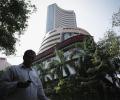
HDFC Bank, Bharti Airtel, Axis Bank, Nestle India, ONGC, L&T and SBI and were among the laggards in the Sensex pack, shedding over 1 per cent. On the other hand, Bajaj Finserv, M&M, Bajaj Finance, Titan and TCS were among the gainers.
.jpg)
Bank stocks have underperformed in the second quarter of FY'14 with the BSE Bankex declining 18 per cent compared to fall of 1 per cent in the BSE 30-stock index, Sensex, during this period.

From 30 Sensex firms, Adani Ports, NTPC, Power Grid, State Bank of India, Nestle, Mahindra & Mahindra, Reliance Industries and Tata Consultancy Services were the biggest laggards. Axis Bank, Infosys, JSW Steel, Tata Motors, HDFC Bank and Kotak Mahindra Bank were among the gainers from the blue-chip pack.

Among the Sensex firms, Mahindra & Mahindra, Bharti Airtel, ICICI Bank, IndusInd Bank, Reliance Industries, Axis Bank and HDFC Bank were among the major laggards. Titan, Kotak Mahindra Bank, Asian Paints, HCL Technologies, Tech Mahindra, NTPC, Nestle and Power Grid were the major gainers.

Among the Sensex firms, HCL Tech, Wipro, Tata Consultancy Services, Tech Mahindra, Nestle, Tata Motors, Infosys, Bharti Airtel, UltraTech Cement and Tata Steel were among the laggards. On the other hand, Axis Bank, HDFC Bank, ICICI Bank, JSW Steel, Mahindra & Mahindra and Kotak Mahindra Bank were the major gainers.

Spending through the credit card in March 2022 jumped 48 per cent year-on-year to top Rs 1 trillion -- five months after it had hit the same figure for the first time in October 2021, buoyed by festive season expenditure. The jump has been driven by the pickup in consumption as the pandemic recedes. Expenditure in March, at Rs 1.07 trillion, was up 24.5 per cent over February, the data put out by the Reserve Bank of India (RBI) showed.
Benchmark stock indices Sensex and Nifty closed with losses in highly volatile trade on Thursday as banking and financial stocks retreated amid a weak trend in global equity markets. The 30-share BSE Sensex declined 89.14 points or 0.15 per cent to settle at 57,595.68. During the day, it touched a low of 57,138.51 and a high of 57,827.99. The broader NSE Nifty dipped 22.90 points or 0.13 per cent to settle at 17,222.75.
Credit card spending dropped 11 per cent sequentially in November at Rs 1.15 trillion, but topped Rs 1 trillion for the ninth month straight, data from the Reserve Bank of India (RBI) showed as the festive season ends and consumption activity slows down. Year-on-year (YoY), spending was up 29 per cent. Card spends have consistently topped the Rs 1 trillion mark, led by the rising share of e-commerce transactions.

Ask rediffGURU Reetika Sharma your insurance, mutual fund and personal finance-related questions.

Moody's has revised to positive the outlook on the long- term ratings of private sector lenders

On the Sensex chart, SBI was the top gainer, rallying around 4 per cent, followed by Bharti Airtel, Reliance Industries, HDFC Bank, ITC, Axis Bank and NTPC. NSE Nifty advanced 78.70 points to a fresh closing peak of 14,563.45.
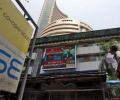
Benchmark indices Sensex and Nifty declined in early trade on Wednesday due to selling in financials, oil and IT stocks amid weak global trends.

Benchmark equity indices Sensex and Nifty gave up early gains to close down by over 0.8 per cent due to fag-end selling in Axis Bank, Reliance Industries and Infosys. The 30-share BSE benchmark plummeted 460.19 points or 0.80 per cent to end at 57,060.87 despite a firm opening. During the day, it hit a high of 57,975.48 and a low of 56,902.30. The NSE Nifty tanked 142.50 points or 0.83 per cent to 17,102.55.
Credit card issuers saw significant erosion of their card base during the July-September quarter as the Reserve Bank of India's (RBI) norms mandated deactivation of cards that have been inactive for a year. The second quarter of the current financial year saw outstanding cards-in-force decline by 2.55 million to 77.7 million. Prior to this, the industry, on an average, was witnessing a net addition of over 1.5 million credit cards a month as players became aggressive on the unsecured lending business after the pandemic.

Paytm app users will continue to use all services like mobile and DTH recharges except for Paytm Payments Bank's offerings including wallet funds, Fastag and bank accounts, according to the company hit by RBI restrictions. Paytm Payments Bank users will not be able to add any funds to their wallet and bank accounts but will be able to use the balance until it is exhausted, according to the RBI order. "The RBI has issued a directive restricting Paytm Payments Bank account/wallet from accepting new deposits or allowing credit transactions after March 15, 2024.

Axis Bank was the top gainer in the Sensex pack, surging around 4 per cent, followed by M&M, HDFC Bank, ITC, SBI, ICICI Bank, Maruti, Kotak Bank and Sun Pharma. On the other hand, HDFC, Titan, Nestle India, Bharti Airtel, ONGC and Infosys were among the laggards.

Bharti Airtel was the top loser in the Sensex pack, slipping around 1 per cent, followed by Tata Steel, HDFC Bank, Infosys, HDFC, Bajaj Auto and PowerGrid.

Not all public sector banks are back in the black, but their collective net profit for the year is Rs 32,346 crore against a Rs 9,013 crore loss in the previous year, points out Tamal Bandyopadhyay.

Some of the fintechs that will get impacted include Cred, Paytm, Phonepe and Amazon Pay, among others.

Moody's Investors Service on Thursday downgraded subordinated debt ratings of 11 Indian banks, including SBI, ICICI Bank and HDFC Bank.

Axis Bank was the top loser in the Sensex pack, skidding over 3 per cent, followed by IndusInd Bank, Titan, HDFC, ICICI Bank, ONGC and HDFC Bank. On the other hand, Reliance Industries, Sun Pharma, HUL, Bharti Airtel and TCS were among the gainers.

Sensex is trading firm; FMCG, real estate going strong.

The outcome of the Union Budget, quarterly earnings from corporates and global trends are the major factors to drive stock market sentiments this week, analysts said. Besides, the trading activity of foreign investors, the rupee-dollar trend and the movement of global oil benchmark Brent crude are also crucial aspects to watch out for.
ICICI Bank was the top loser in the Sensex pack, shedding nearly 2 per cent, followed by UltraTech Cement, Asian Paints, ITC, Kotak Bank, Axis Bank and PowerGrid.

Lenders can now initiate recovery proceedings since the SC has lifted the standstill on asset classification, which protected stressed accounts from slipping into NPAs.

Bharti Airtel was the top laggard in the Sensex pack, tanking around 8 per cent, followed by Tata Steel, IndusInd Bank, NTPC, PowerGrid, ONGC and TCS. On the other hand, Axis Bank, HUL, Infosys, Nestle India and HDFC Bank were among the gainers.
From the 30 Sensex firms, Mahindra & Mahindra, Bajaj Finance, Asian Paints, Nestle, Bharti Airtel, UltraTech Cement, Hindustan Unilever, ITC, and HDFC Bank were the major laggards. In contrast, Infosys, Tech Mahindra, Tata Motors, Axis Bank, Tata Consultancy Services and State Bank of India were among the gainers.

From the Sensex basket, Larsen & Toubro, Bajaj Finance, Axis Bank, State Bank of India, UltraTech Cement, Wipro, ICICI Bank, Infosys, HCL Technologies and Asian Paints were the major gainers. NTPC, JSW Steel and HDFC Bank were the laggards.

The Sensex ended up 380 points at 27,888 and the Nifty advanced 111 points to end five points shy of 8,400.

The RBI on Friday imposed a fine of Rs 6.5 crore (Rs 65 million) on six public sector banks including IDBI Bank, Dena Bank and Indian Bank, for violation of customer identification or KYC norms and anti-money laundering guidelines.

Equity benchmarks nosedived on Friday, with the Sensex crashing 866.65 points to close below the 55,000-mark amid a sell-off in global markets. Unabated foreign fund outflows and firm crude oil prices also weighed on sentiment. The 30-share BSE Sensex dived 866.65 points or 1.56 per cent to finish at 54,835.58.

HDFC was the top gainer in the Sensex pack, surging around 5 per cent, followed by Kotak Bank, ICICI Bank, SBI, HDFC Bank and Axis Bank. On the other hand, Titan, Nestle India, Ultratech Cement and Sun Pharma were among the laggards. NSE Nifty surged 128.05 points to its all-time peak of 16,246.85.

The Reserve Bank of India's (RBI's) latest order on unsecured loans is set to hit the banking sector's growth in the near-term, cautioned analysts, as they see banks slowing down on aggressive retail lending. Besides, cost of funds for non-banking finance companies (NBFC) is expected to inch up as banks will pass on higher capital charge to NBFCs. "We believe the fallout of the RBI action will be mainly on growth, given the rising dependence on unsecured retail loans and lending to NBFCs for growth.

Axis Bank was the top gainer in the Sensex pack, surging around 5 per cent, followed by HDFC twins, ICICI Bank, Bajaj Finance and SBI. NSE Nifty zoomed 274.20 points to end at 14,982.
Among the Sensex firms, Bajaj Finance fell by nearly 3 per cent, the most among the 30 frontline companies. Bajaj Finserv, Axis Bank, HDFC Bank, Reliance Industries, NTPC, ICICI Bank and IndusInd Bank were the other major laggards. In contrast, Tata Motors, Sun Pharma, Maruti and Mahindra & Mahindra were the gainers.

M&M was the top gainer in the Sensex pack, rallying around 8 per cent, followed by Bajaj Finserv, Bajaj Finance, Maruti, Axis Bank, ONGC and HDFC Bank. NSE Nifty surged 194 points to 14,504.80.

India's top private banks might soon exit from the gold coin business.
